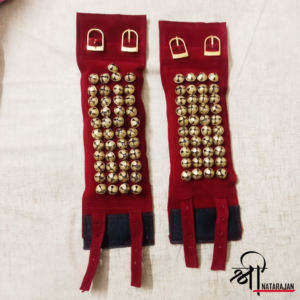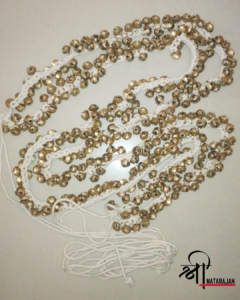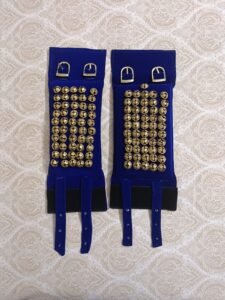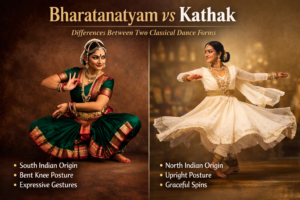

When buying Kathak Ghungroos, one question almost always comes up:
“Should I choose more bells for better sound?”
It sounds logical — more bells should mean louder sound and stronger impact. But in Kathak, things are more nuanced. The number of bells certainly affects price and projection, but it does not automatically determine quality or performance.
Let’s break this down clearly so you can make the right decision.
Why Does Kathak Ghungroo Price Increase with More Bells?
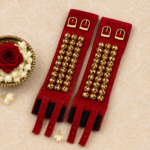
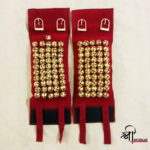
The most visible factor affecting price is the number of brass bells. Common options include:
- 25 bells per strand
- 50 bells per strand
- 75 bells per strand
- 100 bells or more per strand
As the bell count increases, the cost rises because:
- More brass is used
- More hand-tying labor is involved
- The strap or thread material increases
- The overall weight and size increase
However, bell count is just one part of the pricing equation.
Brass Quality Matters More Than Quantity
High-quality brass produces:
- Clear metallic resonance
- Balanced vibration
- Durable performance over time
Lower-grade metal alloys may look similar but often sound dull or uneven. A well-crafted 50-bell set made of pure brass can sound far superior to a cheaply made 100-bell set.
In classical traditions like Kathak, clarity of sound is valued more than sheer loudness. Every strike of the foot (tatkar) must produce a crisp, distinct rhythm — not a chaotic jingle.
Is More Bells Always Better?
The honest answer is no.
More bells increase volume and weight. That can be beneficial on large stages, but it also demands:
- Stronger ankle control
- Better stamina
- Clearer technique
If a dancer’s footwork is not precise, more bells will only amplify mistakes.
Choosing According to Level
Here’s a practical approach:
Beginners (25–50 bells per leg)
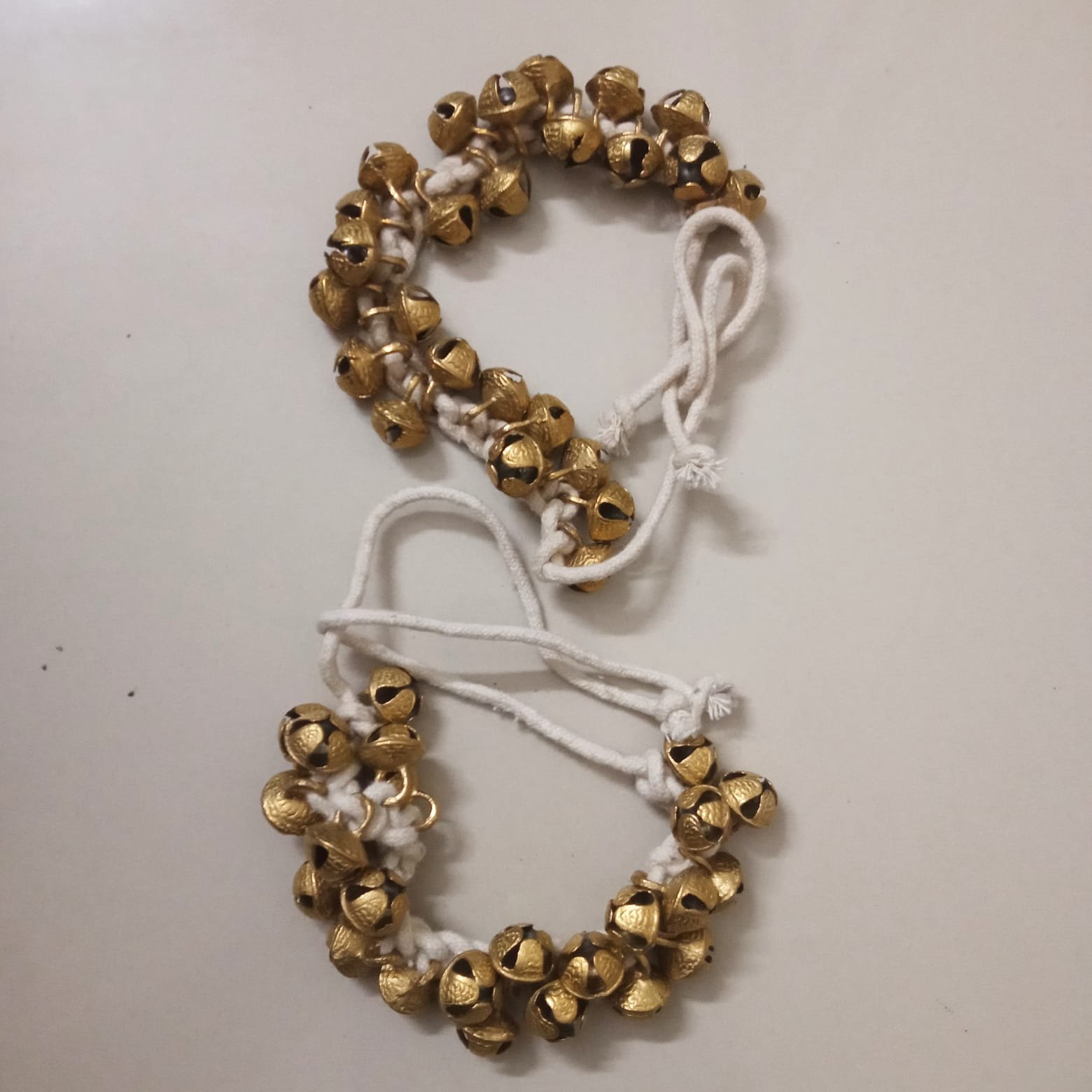
Lightweight and manageable. Helps students focus on learning rhythm without ankle strain.
Intermediate Dancers (50–75 bells per leg)
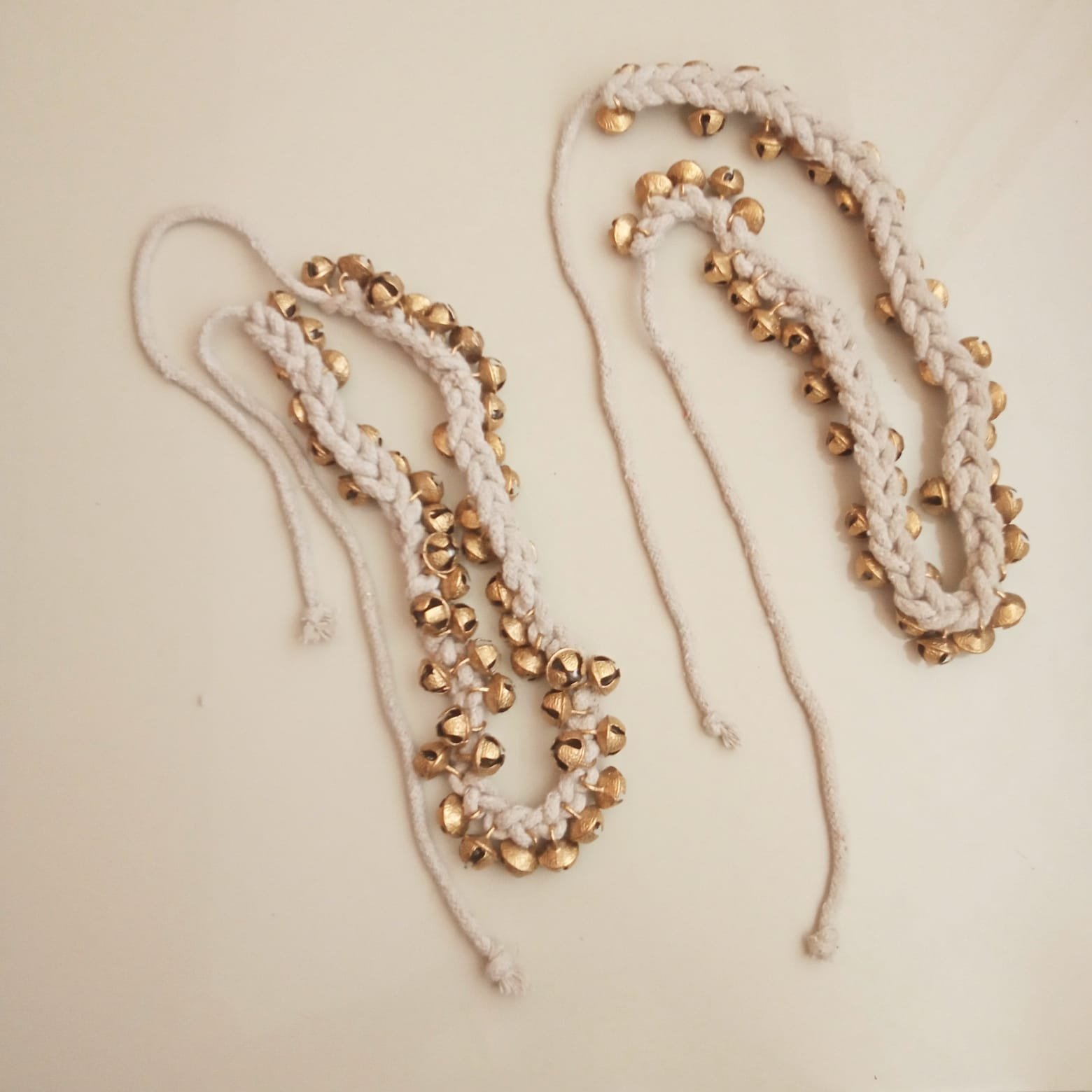
Balanced sound and moderate weight. Suitable for regular practice and small performances.
Advanced Performers (100+ bells per leg)
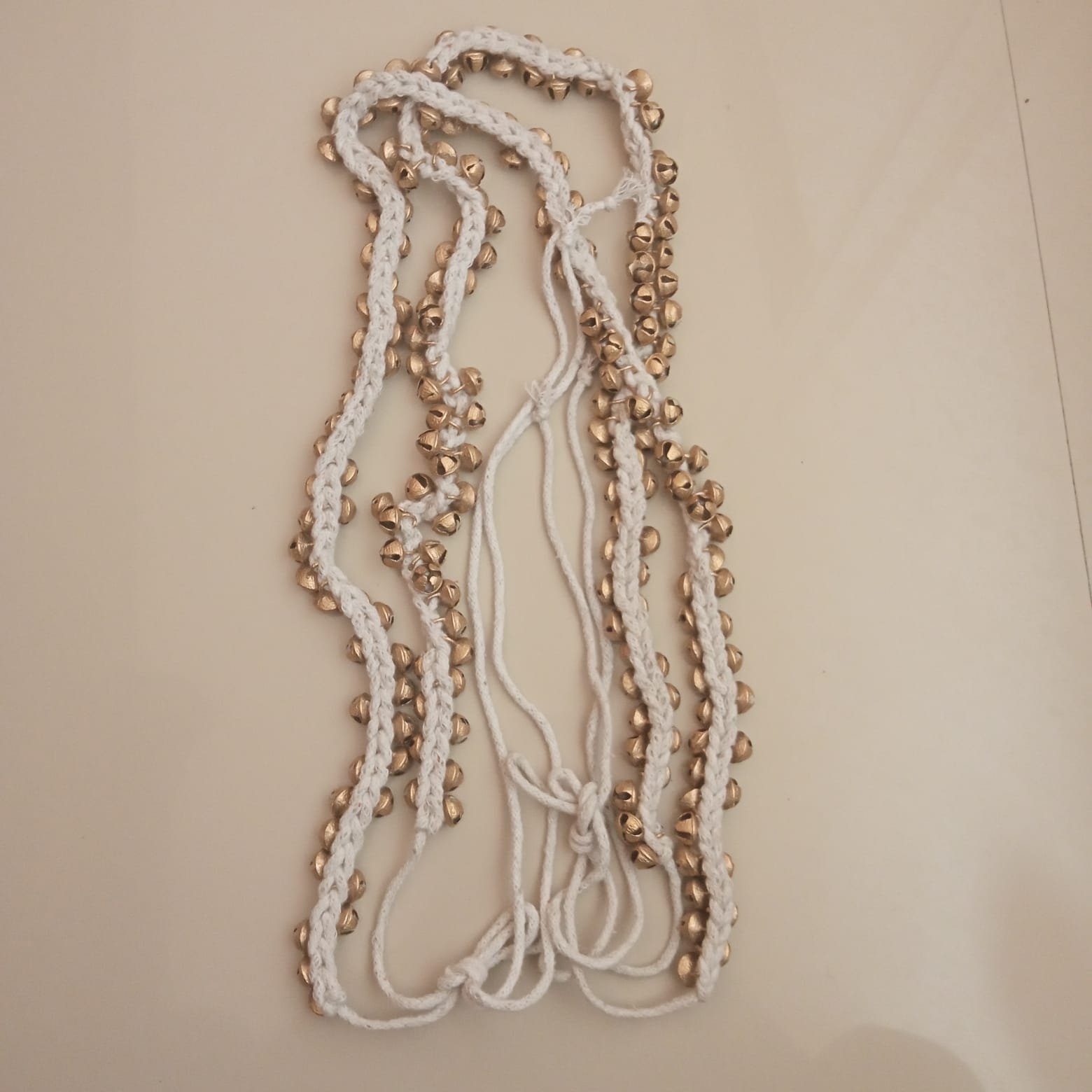
Powerful resonance and stage presence. Ideal for auditorium performances where projection matters.
For children or early learners, lighter Ghungroos are usually safer and more comfortable.
Other Factors That Influence Price
Beyond bell count, pricing also depends on:
- Handcrafted vs machine-threaded tying
- Strength and quality of cotton
- Even distribution and symmetry
- Finishing and durability
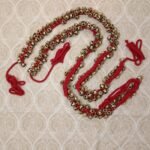
Handcrafted Ghungroos are carefully sorted and tied for consistent sound and balance. Poorly tied sets may have uneven bell spacing, weak knots, or inconsistent sound output.
Sometimes a cheaper set becomes expensive in the long run because it wears out quickly or needs replacement.
Sound vs Weight: What Should You Prioritize?
Many dancers assume heavier Ghungroos mean stronger rhythm. In reality, rhythm comes from controlled footwork, not from weight alone.
Heavier sets can:
- Slow down speed during fast tatkar
- Cause fatigue during long practice sessions
- Increase strain on ankles
On the other hand, the right weight enhances confidence and presence during performance.
The key is balance.
Final Thoughts
So, is more bells always better?
Only if your technique, stamina, and performance needs justify it.
When choosing Kathak Ghungroos, focus on:
- Quality of brass
- Comfort and fit
- Training level
- Long-term durability
In Kathak, precision and clarity define excellence. A well-balanced Ghungroo set that complements your skill level will always be better than simply choosing the highest bell count.
Choose wisely — your rhythm deserves it.